Published: The Mercury 10th January 2026
Arts and cultural events provide important economic impact, writes Edwin Johnstone
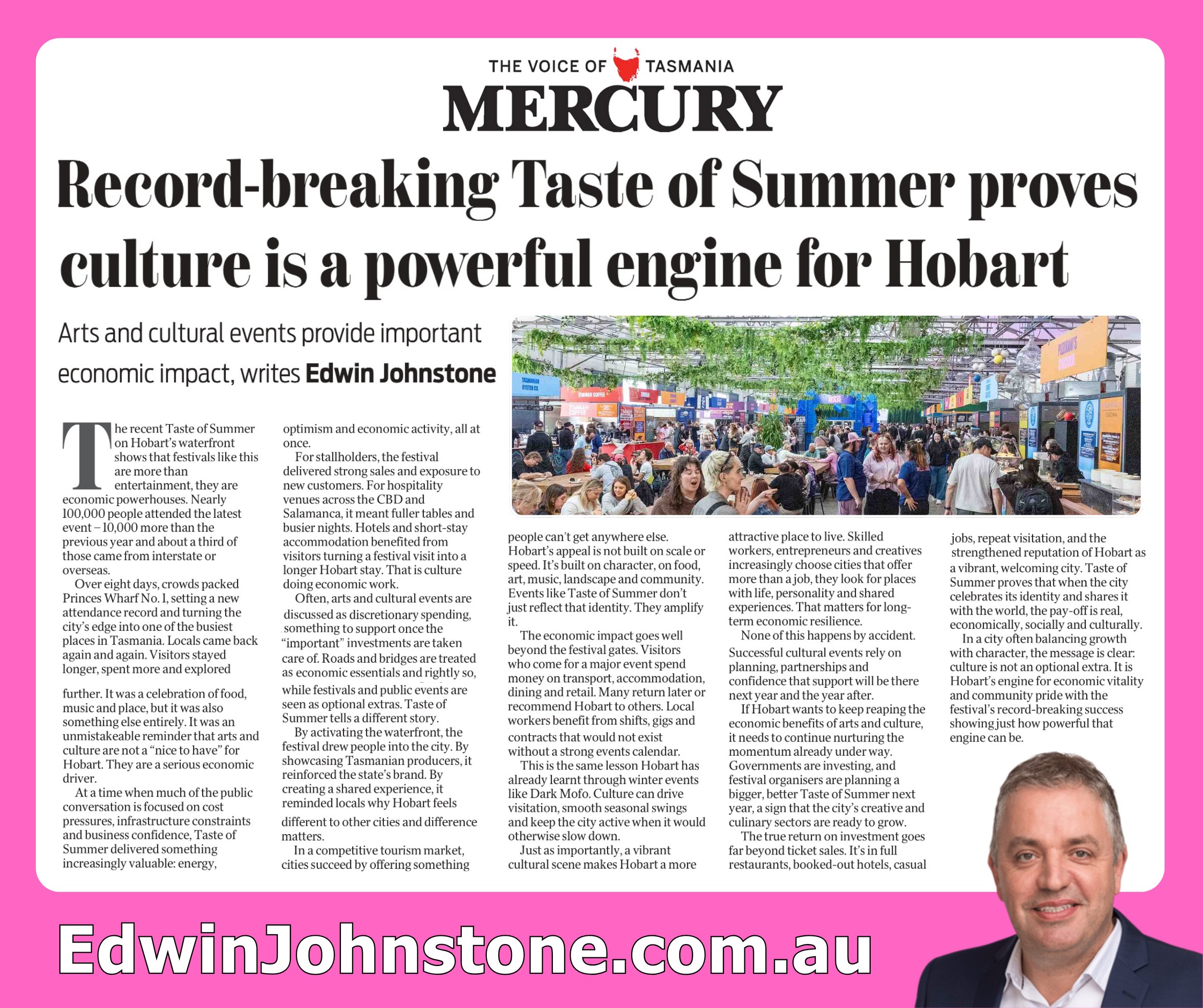
The recent Taste of Summer on Hobart’s waterfront shows that festivals like this are more than entertainment, they are economic powerhouses. Nearly 100,000 people attended, 10,000 more than last year, and about a third came from interstate or overseas.

Over eight days, crowds packed Princes Wharf setting a new attendance record and turning the city’s edge into one of the busiest places in Tasmania. Locals came back again and again. Visitors stayed longer, spent more and explored further.
It was a celebration of food, music and place, but it was also something else entirely. It was an unmistakable reminder that arts and culture are not a “nice to have” for Hobart. They are a serious economic driver.
At a time when much of the public conversation is focused on cost pressures, infrastructure constraints and business confidence, Taste of Summer delivered something increasingly valuable: energy, optimism and economic activity, all at once.
For stallholders, the festival delivered strong sales and exposure to new customers. For hospitality venues across the CBD and Salamanca, it meant fuller tables and busier nights. Hotels and short-stay accommodation benefited from visitors turning a festival visit into a longer Hobart stay. That is culture doing economic work.
Often, arts and cultural events are discussed as discretionary spending, something to support once the “important” investments are taken care of. Roads and bridges are treated as economic essentials and rightly so, while festivals and public events are seen as optional extras. Taste of Summer tells a different story.
By activating the waterfront, the festival drew people into the city. By showcasing Tasmanian producers, it reinforced the state’s brand. By creating a shared experience, it reminded locals why Hobart feels different to other cities and difference matters.
In a competitive tourism market, cities succeed by offering something people can’t get anywhere else. Hobart’s appeal is not built on scale or speed. It’s built on character, on food, art, music, landscape and community. Events like Taste of Summer don’t just reflect that identity. They amplify it.
The economic impact goes well beyond the festival gates. Visitors who come for a major event spend money on transport, accommodation, dining and retail. Many return later or recommend Hobart to others. Local workers benefit from shifts, gigs and contracts that would not exist without a strong events calendar.
This is the same lesson Hobart has already learned through winter events like Dark MOFO. Culture can drive visitation, smooth seasonal swings and keep the city active when it would otherwise slow down.
Just as importantly, a vibrant cultural scene makes Hobart a more attractive place to live. Skilled workers, entrepreneurs and creatives increasingly choose cities that offer more than a job, they look for places with life, personality and shared experiences. That matters for long-term economic resilience.
None of this happens by accident. Successful cultural events rely on planning, partnerships and confidence that support will be there next year and the year after.
If Hobart wants to keep reaping the economic benefits of arts and culture, it needs to continue nurturing the momentum already underway. Governments are investing, and festival organisers are planning a bigger, better Taste of Summer next year, a sign that the city’s creative and culinary sectors are ready to grow.
The true return on investment goes far beyond ticket sales. It’s in full restaurants, booked-out hotels, casual jobs, repeat visitation, and the strengthened reputation of Hobart as a vibrant, welcoming city. Taste of Summer proves that when the city celebrates its identity and shares it with the world, the payoff is real, economically, socially, and culturally.
In a city often balancing growth with character, the message is clear: culture is not an optional extra. It is Hobart’s engine for economic vitality and community pride with the festival’s record-breaking success showing just how powerful that engine can be.
Edwin Johnstone is Chair of the Confederation of Greater Hobart Business and an advocate for the Hobart community.